Plastering services for skimmed walls and ceilings in Cape Town
A smooth skim finish starts with the condition of the surface beneath it. Plastering services in Cape Town can help create an even base on walls and ceilings, while an assessment identifies preparation needs and any visible issues to address before plastering.
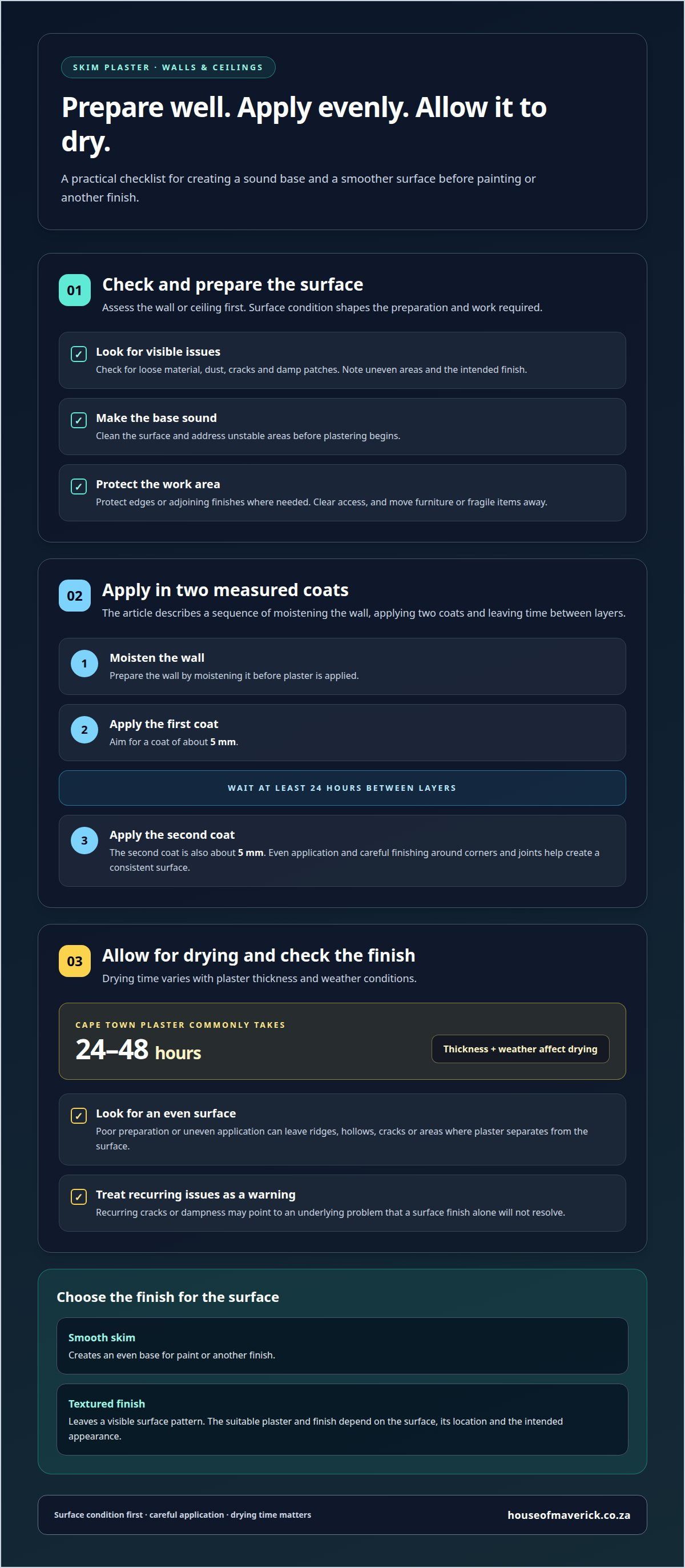
The plastering process starts with a suitable surface: according to the Food and Agriculture Organization of the United Nations, the wall is moistened before plaster is applied in two coats of about 5 mm each, with at least 24 hours between layers. Drying time varies with plaster thickness and weather, and Cape Town plaster commonly takes 24-48 hours to dry.
A clear project assessment and quote help set out the work involved before it begins. This article explains what skimmed wall and ceiling plastering includes, how assessments and quotes are approached, and which Cape Town areas are covered, so you can understand the process and plan the next step.
Table of Contents
Plastering skimmed walls and ceilings
Skim plaster creates a more even surface on interior walls and ceilings. The result depends on suitable preparation, consistent application and careful finishing around corners and joints.
Interior Wall and Ceiling Work
Interior plastering smooths uneven walls and ceilings before painting or another finish. On ceilings, an even surface helps reduce visible ridges when light falls across it. Exterior work faces the weather, so its finish needs to suit the exposure. In either case, assess the surface condition and intended finish before work begins.
Plaster Types and Finishes
For Cape Town homes, the suitable plaster and finish depend on the surface, its location and the intended appearance. A smooth skim finish suits walls or ceilings that need an even base for paint, whilst a more textured finish leaves a visible surface pattern. According to the Food and Agriculture Organization of the United Nations, the wall is moistened before plastering, which is applied in two coats of about 5 mm each, with at least 24 hours between layers.
Surface Preparation
Before plastering, assess the wall or ceiling for loose material, dust, cracks and damp patches. Clean the surface, address unstable areas and protect edges or adjoining finishes where needed. This preparation gives the plaster a sound starting point. You can help by clearing access to the work area and moving furniture or fragile items away.
Preventing Poor Plastering Problems
Poor preparation or uneven application can leave ridges, hollows, cracks or areas where plaster separates from the surface. A professional reduces these risks by checking the substrate, applying even coats and allowing each layer to dry before continuing. Plaster in Cape Town usually takes 24-48 hours to dry, depending on thickness and weather. Recurring cracks or dampness may indicate an underlying problem that a surface finish alone will not resolve.
Project assessments and quotes
A site assessment turns visible issues into a practical scope. For plastering services in Cape Town, it helps establish the surface preparation, access and finish the project requires.
Factors Affecting Plastering Prices
Plastering costs depend on the area, surface condition and preparation required. Sound walls may need less preparation than surfaces with loose plaster or uneven patches, while ceiling access can affect the work involved. A useful quote describes the surfaces and preparation included, rather than relying on a broad room description.
The intended finish and materials also shape the scope: a smooth skim coat and local surface repairs involve different tasks. Cost depends on the project, including its area, condition, access, preparation and finish.
Quotes and Project Management
The process starts with a site assessment. The team examines the rooms, walls and ceilings, notes the areas needing plaster and considers access. A single damaged wall differs from several rooms with uneven surfaces, so the assessment defines the work instead of assuming every project has the same scope.
After you give permission to proceed, a detailed quote sets out the proposed work. Review its scope, preparation requirements, finish and any exclusions. Clear descriptions give everyone a shared reference before work begins and make changes to the scope easier to identify.
Project planning then sequences preparation, plastering and follow-on finishes. The time required depends on the surface condition, amount of work and drying conditions. A defined scope helps coordinate access to affected rooms and plan around how the property is used.
For a defined scope and next steps, request a plastering assessment.
The stated sequence keeps project assessment and the detailed quote distinct. Field agents are sent to assess a project, while a detailed quote is provided after the client gives permission to proceed. This makes permission an explicit step before the quote, rather than treating a detailed quote as automatic at the assessment stage. Clients can use that sequence to understand when the assessment occurs and when the company provides its detailed quote.
Cape Town service areas
The property location and access arrangements help give a Cape Town plastering assessment practical context. Share the suburb and site address, along with any details that affect access to the work area.
For a home, identify the suburb and rooms needing work. For a commercial property, include the building name and relevant floor or unit. Describe the location separately from the work scope, which should specify the walls, ceilings and intended finish.
Give the exact property location rather than relying on a Cape Town label alone. A useful project brief identifies the address, surfaces to assess and any access arrangements. The location helps plan the assessment, while the surface condition and scale of the work determine the plastering scope.
Reviews and references are most useful when they describe plastering work specifically. Look for details about preparation, finish consistency, communication and how the team handled a comparable property. A general rating says less about the work than a project account describing skimmed walls or ceilings and the completed result.
The word “plastering” alone does not determine whether permits are required. A surface finish differs from work that forms part of wider building changes, so the project scope and property context matter.
Likewise, don't assume every plasterer provides the same workmanship guarantee or insurance cover. Written project terms should explain the work covered, relevant exclusions and applicable insurance arrangements. A reference to plastering alone does not establish those details.
For a Cape Town project, bring the location and scope together for the assessment: share the address, affected rooms, surface condition and access details. This gives the project a clear practical basis, while keeping location separate from the technical plastering requirements.
What plastering services are available in Cape Town?
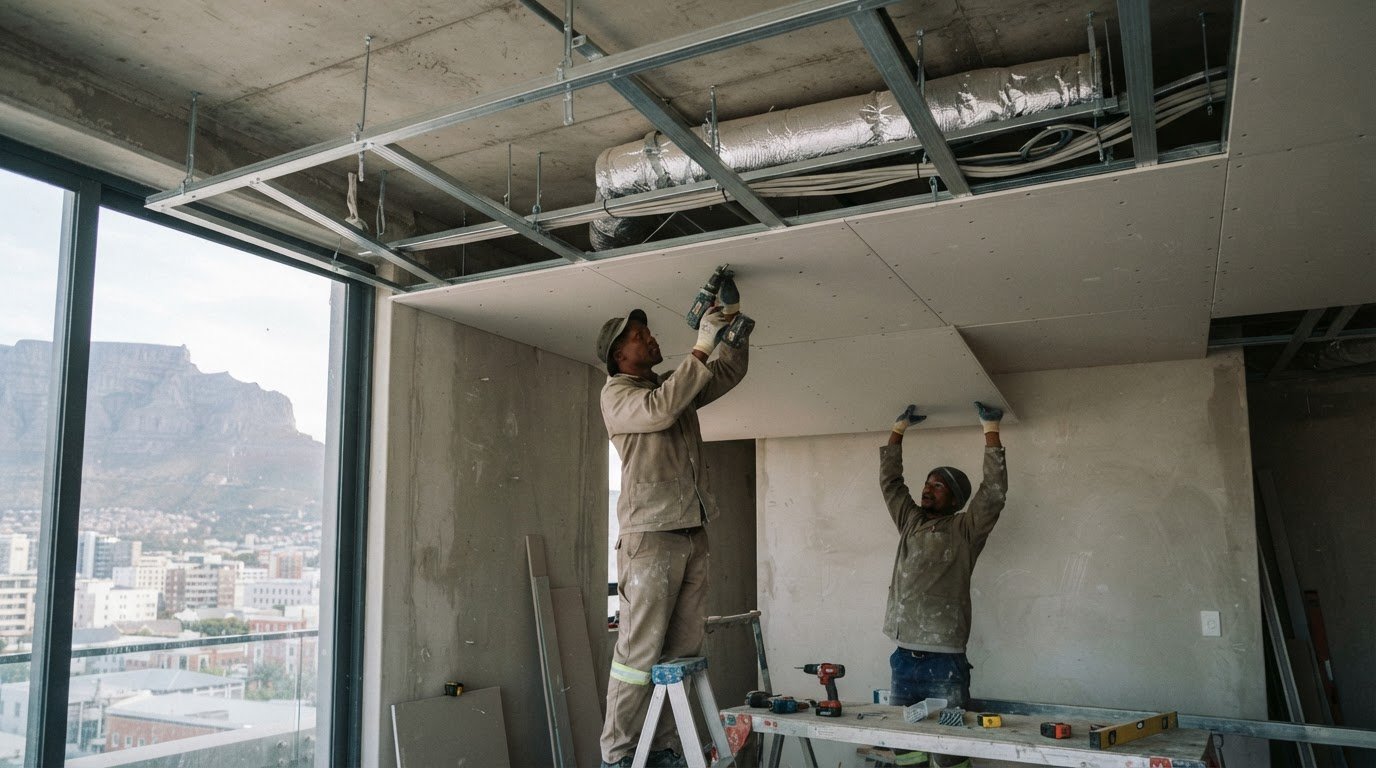
Cape Town plastering work can include skim coats on walls, ceiling plastering and finishing plasterboard surfaces. The right scope depends on the condition of the surface and the finish required. An assessment distinguishes areas needing a fresh skim from those needing local repairs or more extensive preparation.
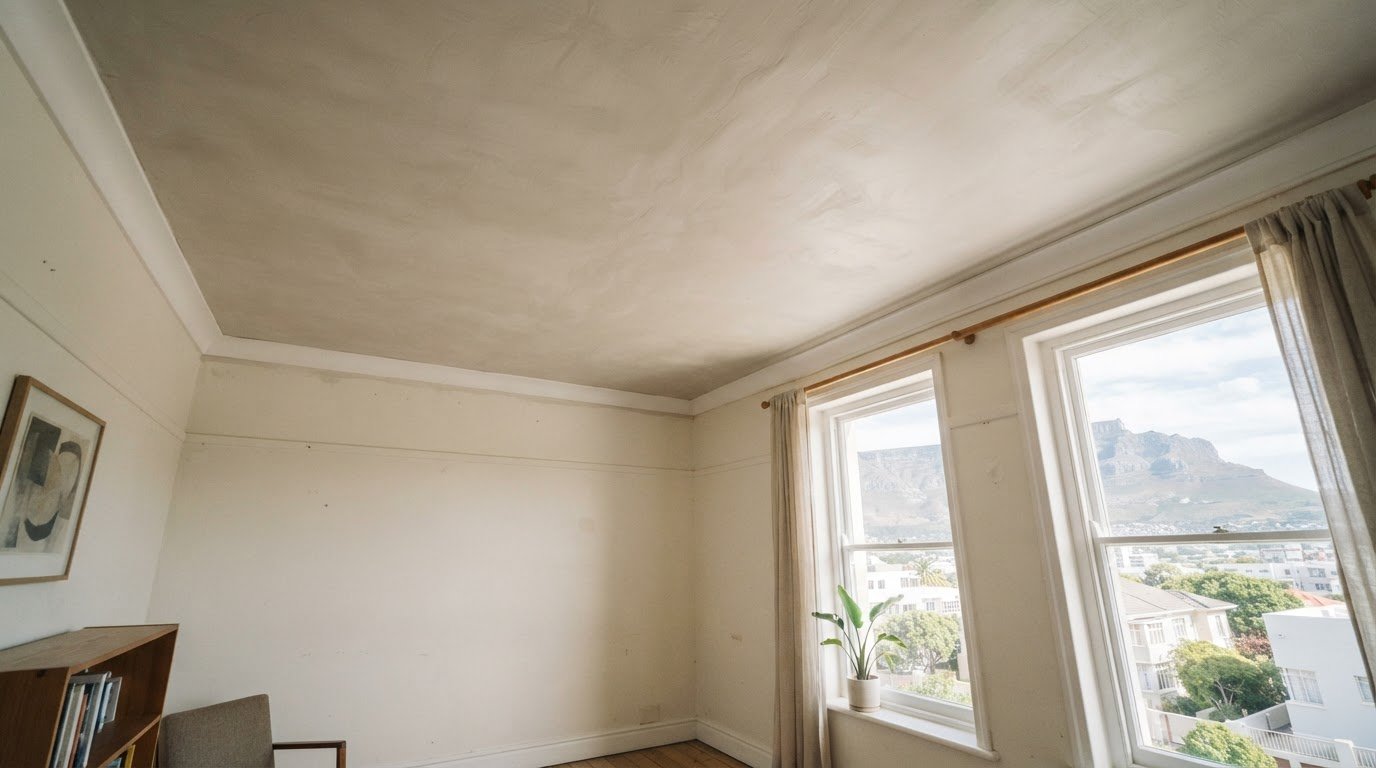
For example, an uneven interior wall may need a skim to create a consistent base for painting. A ceiling project may focus on smoothing visible joins or surface irregularities. Plastering over drywall finishes the board surface so it blends with adjoining walls. The quote should identify each area and intended finish.
Preparation and application form part of the service, not just the final plaster coat. The plasterer assesses the substrate, removes loose material where needed and prepares surfaces for adhesion. According to the Food and Agriculture Organization of the United Nations, a wall is moistened before plastering, which is applied in two coats of about 5 mm each, with at least 24 hours between layers.
Good finishing also requires attention to corners, edges and transitions between surfaces. A skimmed wall meeting a ceiling needs a neat junction, and patched areas need to blend with the surrounding surface. These details affect how even the room looks in natural or artificial light.
Plastering is a surface finish, so recurring cracks or dampness may indicate an issue beneath the plaster layer. These signs should be considered when defining the work. The scope needs to distinguish surface preparation and plastering from any underlying repairs, so it reflects the condition found on site.
For walls, ceilings or dry wall surfaces that need professional plasterwork, discuss your plastering project and its required finish.
House of Maverick
House of Maverick can include plastering in a wider property finishing or remodelling project. A coordinated scope can bring wall and ceiling work together with Painting, preparing the surfaces for their next finish.
For a home or office project, an assessment can establish which rooms need plastering and how the work relates to Dry Wall and Ceilings or broader remodelling. This is useful when several surfaces need attention and work needs to be sequenced. House of Maverick also offers Office Remodelling, Home Remodelling and Air-conditioning as part of its property services.
When discussing your project, share the property location, surfaces needing work and intended finish. Contact House of Maverick to discuss how plastering can fit into your property project.
Plan the next stage of your property work
Before arranging plastering, consider how the finished surfaces fit into your wider plans. Painting after plastering or coordinating the work with office remodelling can shape the sequence of tasks. Air-conditioning work may also need to be considered when planning changes to a room. Sharing these priorities at the outset helps define a practical scope.
Choosing plastering services in Cape Town is an opportunity to plan beyond the immediate surface. Consider how each room will be used, the finish you want and whether other work should be coordinated. A clear brief gives the assessment a useful starting point and keeps decisions focused on your property’s needs.
When you’re ready to discuss your project, contact House of Maverick. A considered first conversation can help you move towards a well-planned finish.
Frequently Asked Questions
How much does plastering cost per square metre in Cape Town?
Plastering costs per square metre in Cape Town depend on the project, and a price is provided after a quote request. The main factors include the area, surface condition, access, preparation and finish. For a useful comparison, make sure the measured area is clear, especially where rooms include recesses, multiple walls or ceilings alongside wall surfaces.
How do I compare plastering quotes and check what they include?
Compare quotes by matching the work described, not just the totals. Check that each names the same rooms and surfaces, preparation tasks, plaster finish and repairs. One quote, for example, may include a ceiling as well as the walls, while another excludes it. Note exclusions and clarify unclear wording in writing before agreeing to the scope.
What workmanship guarantees and insurance should a Cape Town plasterer provide?
Do not assume every plastering project has the same guarantee or insurance arrangements. Read the written terms for the work covered, exclusions and any applicable insurance details.
Comments