Residential electrician Cape Town: choosing an electrician for your home
A flickering light or a socket that stops working can point to a problem beyond the fitting itself. A residential electrician in Cape Town handles electrical installations, repairs, lighting work and fault-finding in the home. Contact one when electrical equipment needs attention, a fault keeps returning or you’re planning changes that involve wiring or lighting.
It’s sensible to understand what the work involves before arranging it. A professional can assess the issue, explain the repair or installation needed and carry out the work with care. This guide covers common residential electrical jobs and situations that call for professional help.
You’ll also see how electrical work can fit into a wider home improvement project, from replacing lighting to coordinating changes during a remodel. This context can help you decide what to address and what information to have ready when planning work at home.
Table of Contents
Residential electrician Cape Town
Electrical work in a Cape Town home can range from replacing a light fitting to tracing a fault that repeatedly trips a circuit. A residential electrician assesses the problem, identifies the work required and carries out repairs or installations. The right scope depends on the symptoms, the affected area and whether the job involves existing wiring or a planned change.
Some tasks are planned around everyday improvements. For example, a kitchen renovation may involve moving lighting to suit a new layout, while a home office may need additional sockets for equipment. A repair is different: a flickering light, a socket that stops working or a repeatedly tripping circuit needs investigation before anyone assumes the cause. The visible symptom doesn’t always reveal the underlying issue.
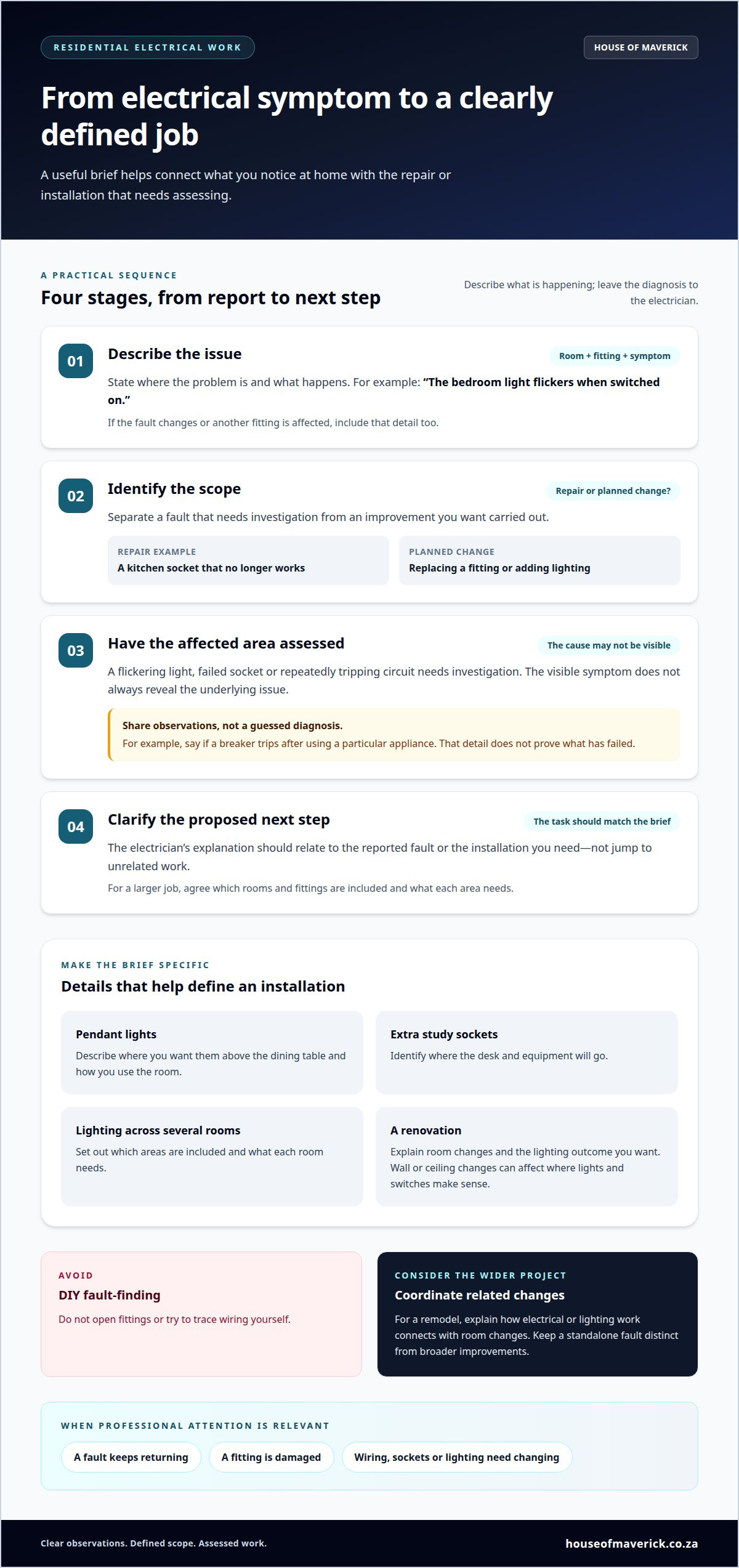
Contact an electrician when a fault recurs, a fitting is damaged or a project involves changes to wiring, sockets or lighting. Note the room, the affected fitting and what happens before the problem starts. “The bedroom light flickers when switched on” gives a clearer starting point than “the electricity is faulty”. Don’t try to open fittings or trace wiring yourself.
For a planned installation, explain the intended result before work begins. If you want pendant lights above a dining table, describe their position and how you use the room. For extra sockets in a study, identify where the desk and equipment will go. These details help define the work and show how the installation should fit the home’s layout.
A clear work process typically follows practical stages. Each helps connect the reported issue to a suitable repair or installation:
Describe the issue. Give the room, fitting and symptom, such as a kitchen socket that no longer works.
Identify the scope. Distinguish a repair from a planned change, such as replacing a fitting or adding lighting.
Assess the work. The electrician examines the affected area and determines what needs attention.
Explain the next step. The proposed work should relate to the reported fault or the installation you need.
When choosing who will handle work at home, focus on how clearly they explain the job. A useful explanation connects the symptom to the proposed task, rather than jumping from “the hallway light is out” to replacing unrelated fittings. For a larger job, such as changing lighting in several rooms, agree which areas are included and what each room needs.
Describe the problem specifically, but avoid trying to diagnose its cause. A breaker that trips after you use a particular appliance is useful information, but it doesn’t prove what has failed. The electrician can consider the sequence you describe and inspect the affected installation. If the fault changes, such as a socket failing after another fitting starts flickering, share that detail too.
Before work starts, establish the practical boundaries of the task. Replacing one ceiling light differs from changing the lighting arrangement across a lounge and passage. The number and position of fittings, access to the work area and related building changes can affect the scope. A defined scope helps everyone understand what the visit or project is intended to address.
Electrical work may also form part of a wider home improvement. Moving a wall or changing a ceiling can affect where lights and switches make sense, so planning these elements together helps the finished room function as intended. For a standalone fault or fitting, describe the issue directly. For a renovation, explain the room changes and the lighting outcome you want.
House of Maverick
House of Maverick handles property improvements that can sit alongside a home’s electrical and lighting needs. If you’re planning changes to a room, Painting, Dry Wall and Ceilings, or Air-conditioning can form part of the wider project. These services address the surrounding space rather than diagnosing an electrical fault.
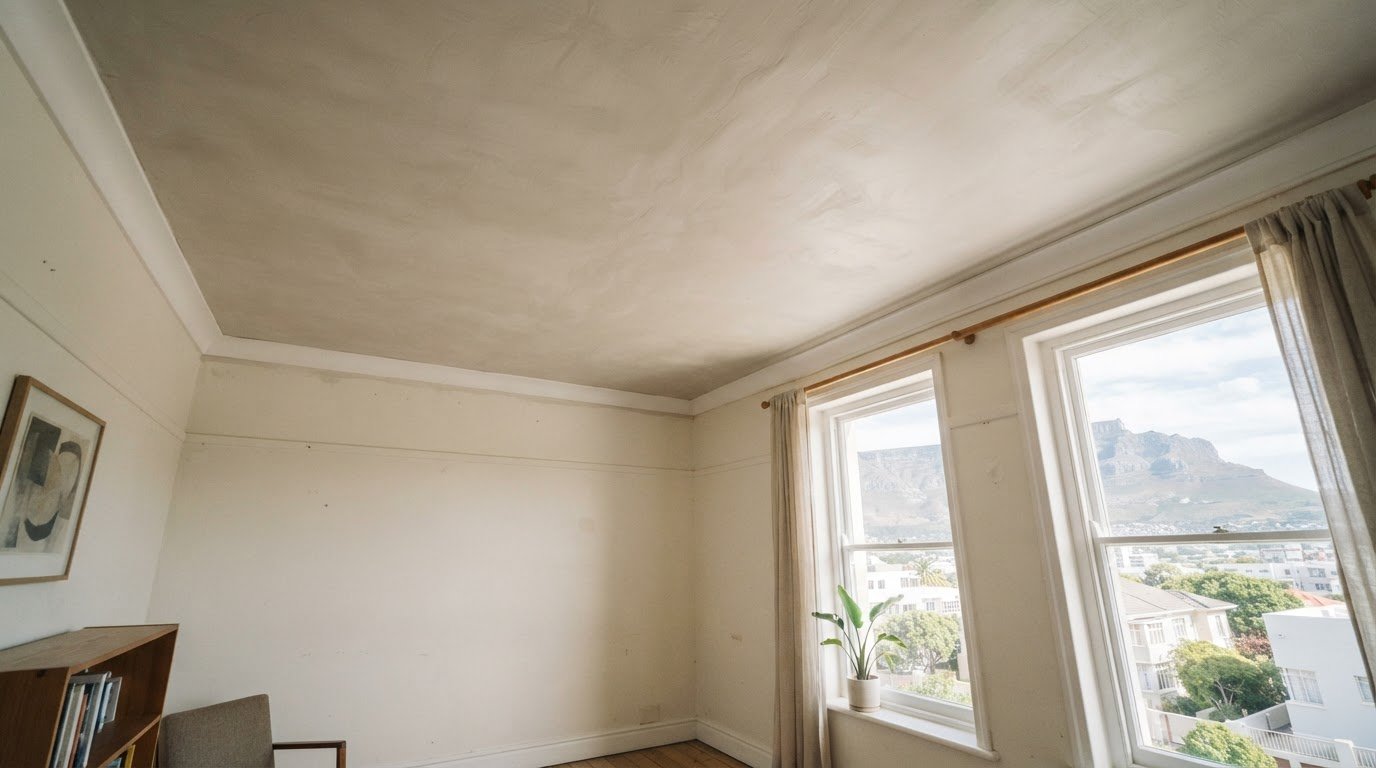
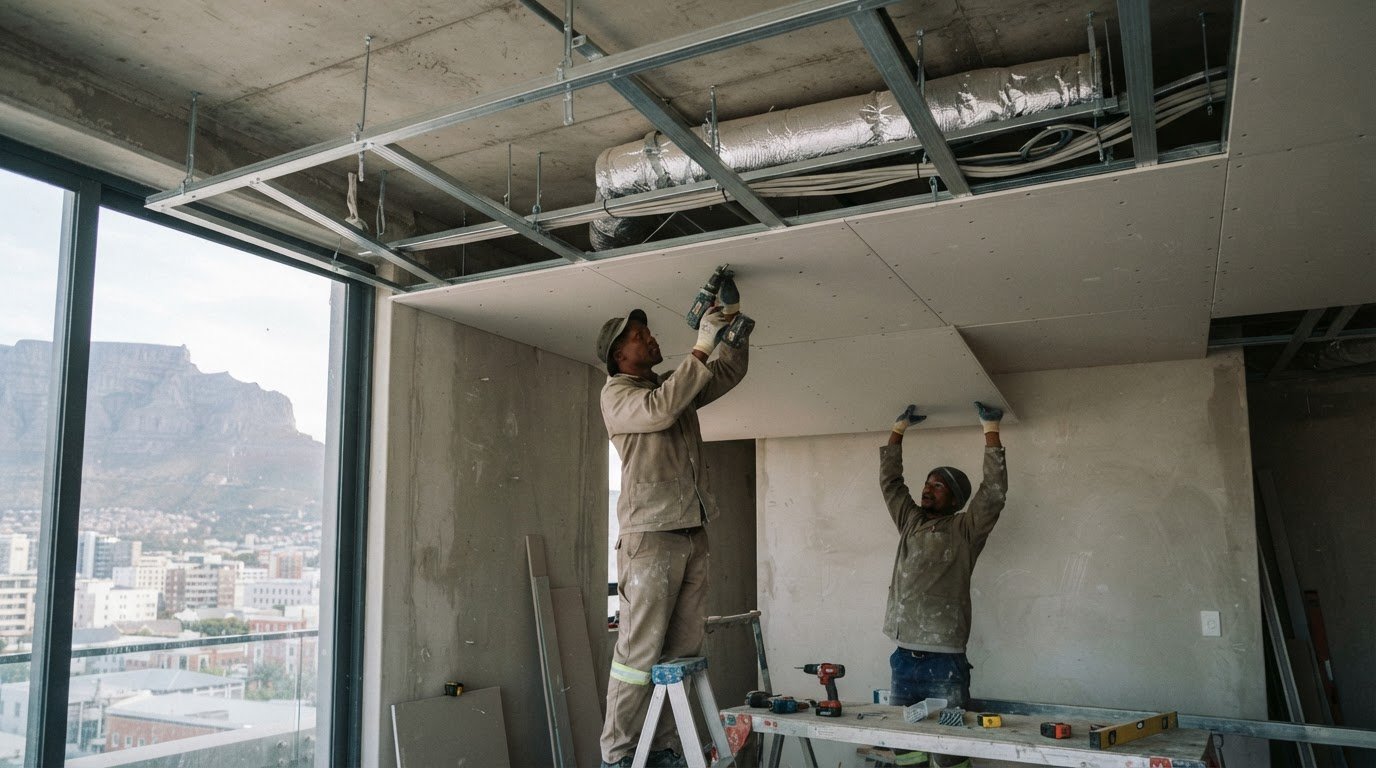
For example, a ceiling alteration can change the setting for planned lighting, while Painting may help complete a room after renovation work. Planning related improvements together keeps the intended finish and practical requirements in view. House of Maverick also undertakes Office Remodelling, alongside residential and commercial work.
For related property improvements, contact House of Maverick to discuss your project.
Plan the next step with confidence
Before arranging work, decide what a good result should look like and how the electrical task fits the room’s wider use. A residential electrician in Cape Town can work from a clear brief rather than assumptions. If the property project also involves Painting, Air-conditioning or Office Remodelling, explain how these elements connect so the overall scope is easier to plan. Keep the immediate electrical concern distinct from improvements that can be scheduled as part of a broader project.
House of Maverick supports property projects that combine practical changes with considered finishes. A concise description of the space, the outcome you want and the work already planned gives the conversation a useful starting point. It can also help shape a sensible work sequence while keeping the finished space’s function in view.
When you’re ready to discuss the next step, contact House of Maverick today. A clear brief is a practical way to begin shaping a well-planned home project.

Comments