Brickwork repair in Cape Town, including wall finishes
A sound brick repair can still leave a wall looking unfinished if the plaster and surface finish are overlooked. Brickwork repair in Cape Town can include repairs to damaged bricks and mortar, with plastering and wall finishes considered as part of the work.
It’s sensible to assess the whole wall, not just its most visible crack. Moisture, ageing finishes and failed mortar joints can all affect the work required, so the assessment should consider both the damage and its likely cause.
This article explains how repairs are assessed and quoted, what boundary wall work can involve, and how plastering and finishing fit into the project. It also covers the Cape Town areas served, helping you understand the process and decide what information to provide for a quote.
Table of Contents
Assessment, quotes, and project process
A sound assessment looks beyond the visible crack to check for damage, moisture and failed joints. In Cape Town, sea spray, humidity and winter rain can increase the risk of spalling.
A useful quote sets out the repair scope, finish and factors affecting cost, rather than treating every damaged wall alike.
Choosing a Reputable Contractor
Before work begins, ask for a clear scope distinguishing brick replacement, mortar work, plastering and protective finishes. It should explain what will be removed, how the repair will be completed and whether access or sequencing affects the work. Costs depend on the extent of damage, materials, access and finishing requirements, so pricing follows a quote request.
Assessing Structural Wall Cracks
An assessment considers the crack’s width and direction, whether it is widening, and nearby signs such as rust stains, peeling plaster or crumbling bricks. It also checks for moisture and failed joints, since visible damage may point to an underlying cause. If the damage appears structural or suggests movement, an engineer’s assessment may be appropriate before repairs proceed. Structural damage can create a collapse risk.
Municipal approval or a building permit depends on the proposed work. Repointing existing joints is different from changing or rebuilding a wall, so identify the scope and applicable approval requirements before work starts.
For repointing, failed mortar is removed, the joints are prepared and suitable mortar is applied. Damaged bricks are replaced where needed. The repaired area can then be plastered and painted if that finish is included in the scope.
The repair schedule depends on the damage, access, work sequence and finish, so a site assessment helps plan the work. On occupied properties, safe access, debris control and sequencing help manage falling-material and access risks. The quote should explain these practical arrangements alongside the repair steps.
Boundary wall construction and repairs
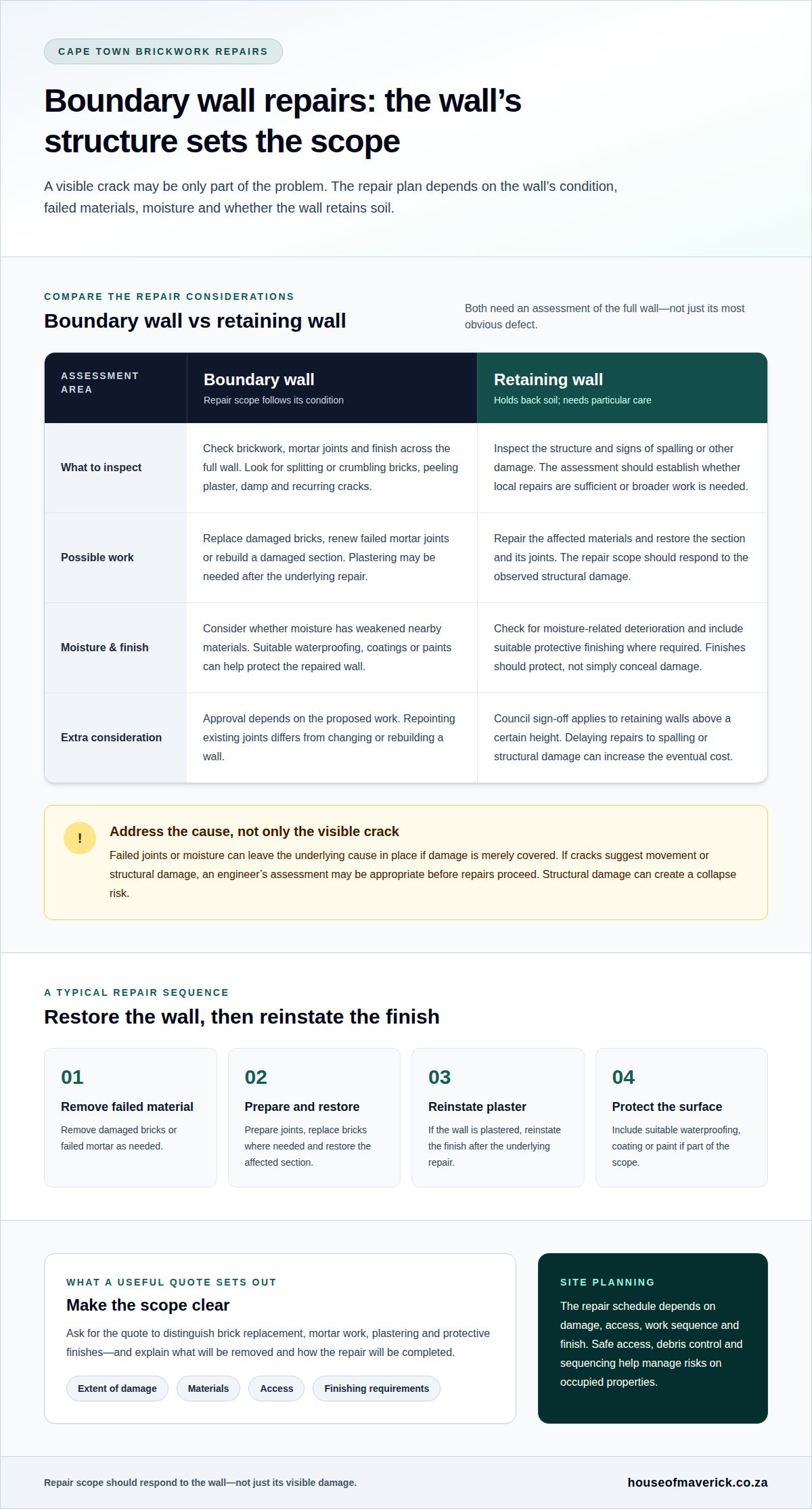
Boundary wall repairs may involve replacing individual bricks, renewing mortar joints or rebuilding a damaged section. The right scope depends on the wall’s condition and whether it retains soil.
Assessing the wall
Assess the full wall, including its brickwork, joints and finish, rather than focusing only on the most visible defect. For example, a cracked section may need more than surface filling if moisture has weakened nearby materials. The assessment should identify the work area and whether it requires brick replacement, repointing, plastering or a protective coating.
Water entering concrete can corrode and expand steel reinforcement, leading to cracks, flaking and structural damage. On a boundary wall, splitting or crumbling brick and peeling plaster are signs that closer inspection may be needed. The quote should describe the repair scope and how it responds to the observed damage.
Repairing damaged sections
Repair starts with addressing the affected materials. Damaged bricks or failed mortar are removed as needed, then the section and its joints are restored. If the wall is plastered, the finish can be reinstated after the underlying repair. Covering visible damage without addressing failed joints or moisture can leave the original cause in place.
Retaining walls need particular care because they hold back soil. In Cape Town, council sign-off applies to retaining walls above a certain height. Early detection and repair of spalling or structural damage can help avoid major failure and costly refurbishment. Delaying repairs can increase the eventual cost.
Protecting the repaired wall
Waterproofing and suitable coatings or paints can help protect a wall from moisture-related deterioration. The finish should suit the wall and the repair, rather than simply conceal damaged brickwork. A clear quote states whether protective finishing is included alongside the masonry repairs.
If a boundary wall has recurring cracks or crumbling sections, an assessment can establish whether local repairs are sufficient or broader work is needed. That distinction guides the repair plan and helps protect the wall’s structure.
Bricklaying service areas across Cape Town
Cape Town properties face different conditions depending on their position, exposure and building surroundings. A useful service-area description names the suburbs covered, while an assessment considers each property’s specific setting.
Damp and salt damage can develop when moisture enters brickwork through failed waterproofing, ageing finishes or exposed joints. Sea spray and extended winter rainfall increase moisture exposure in Cape Town, while salts carried by water can mark or damage masonry as it dries.
Coastal conditions can affect repair preparation and finish selection. The assessment should consider how far moisture has travelled, whether mortar or plaster has deteriorated, and where water may be entering. Waterproofing and suitable coatings or paints can help protect repaired surfaces from further moisture exposure.
Location also affects repair planning. A property near the coast may need particular attention to weathered exterior finishes, while a sheltered inland wall may show damage linked to leaks or ageing materials. In either setting, the repair scope should respond to the wall itself, not just its location.
When requesting brickwork repair in Cape Town, provide the property’s suburb and describe the affected wall, its finish and visible damage. A photograph can help show whether the work concerns a boundary wall, an exterior elevation or a plastered surface. These details help shape an assessment and quote around the repair required.
Service-area information is clearest when it identifies named suburbs rather than relying only on a broad city label. The property location also helps establish access arrangements and whether the wall’s exposure may affect the repair sequence. Coastal access, nearby buildings and the position of the damaged section can all shape site planning.
Salt marks, peeling finishes and damp patches deserve attention alongside cracked brickwork. Treating the visible surface without addressing moisture entry can leave the underlying cause in place. A careful inspection connects the property’s Cape Town setting with the materials and protective finish selected for the repair.
How do you repair cracked brick walls and mortar joints?
An assessment begins with the crack, surrounding bricks and mortar joints. It checks for movement, moisture and failed joints because durable repairs address the cause as well as visible damage. A crack linked to water ingress needs a different response from damage confined to deteriorated mortar.
Once the repair scope is clear, the work follows a planned sequence. The treatment depends on whether bricks, joints or nearby finishes have failed.
Prepare the area. The team arranges safe access and controls debris, especially on occupied properties where falling material could create risks.
Remove failed material. Damaged bricks and loose or deteriorated mortar are taken out carefully, keeping the repair area focused on affected masonry.
Address the cause. If assessment identifies water ingress, corrosion or failed joints, the repair plan includes the underlying issue rather than simply covering the crack.
Rebuild and repoint. Replacement bricks are laid where needed, and prepared joints are filled with suitable repair mortar.
Restore the finish. Where the wall is plastered, the surface can be reinstated after the masonry work. Protective paint may form part of the specified finish.
For spalling concrete, damaged material is removed, corroded reinforcement is treated and the area is rebuilt with repair mortar. Plaster and protective paint can then complete the surface. This sequence responds to damage caused when water enters concrete, corrodes steel reinforcement and contributes to cracking or flaking.
Consider repaired cracks alongside nearby joints and finishes. For example, renewing mortar may not resolve recurring damage if an unresolved leak continues to wet the wall. The repair scope should state which materials will be replaced and how the underlying cause will be addressed.
If a cracked wall needs a professional assessment, request a brickwork repair quote to discuss the work required.
House of Maverick: Roof repairs
House of Maverick provides roof repairs when water entering through a damaged roof may be contributing to damp brickwork. A wall repair can address visible masonry damage, but recurring moisture also calls for attention to its source. Identifying whether the roof or another part of the building is allowing water in helps define the work sequence.
If a property has roof damage and deteriorating wall finishes, addressing water ingress is important for protecting the repair. House of Maverick also offers painting, which can form part of wider property maintenance once underlying moisture issues are addressed. The work depends on the condition of the roof and affected areas.
Contact House of Maverick to discuss roof repairs for your property.
Plan the next step for your property
A brickwork repair in Cape Town is also an opportunity to consider the condition of the surrounding property. If damp or deterioration affects more than one area, a coordinated plan can define the work and its sequence before repairs begin.
House of Maverick provides building and plasterwork for masonry and wall finishes, alongside office remodelling, painting and air-conditioning for wider property requirements. The scope depends on the building’s condition and the work needed. Describe the affected wall and any related concerns to start a focused conversation about the project.
For a considered next step, contact House of Maverick to discuss your property requirements. Taking action on the repair plan can help you move towards a well-maintained space with confidence.
Frequently Asked Questions
Can you plaster or finish the brickwork too?
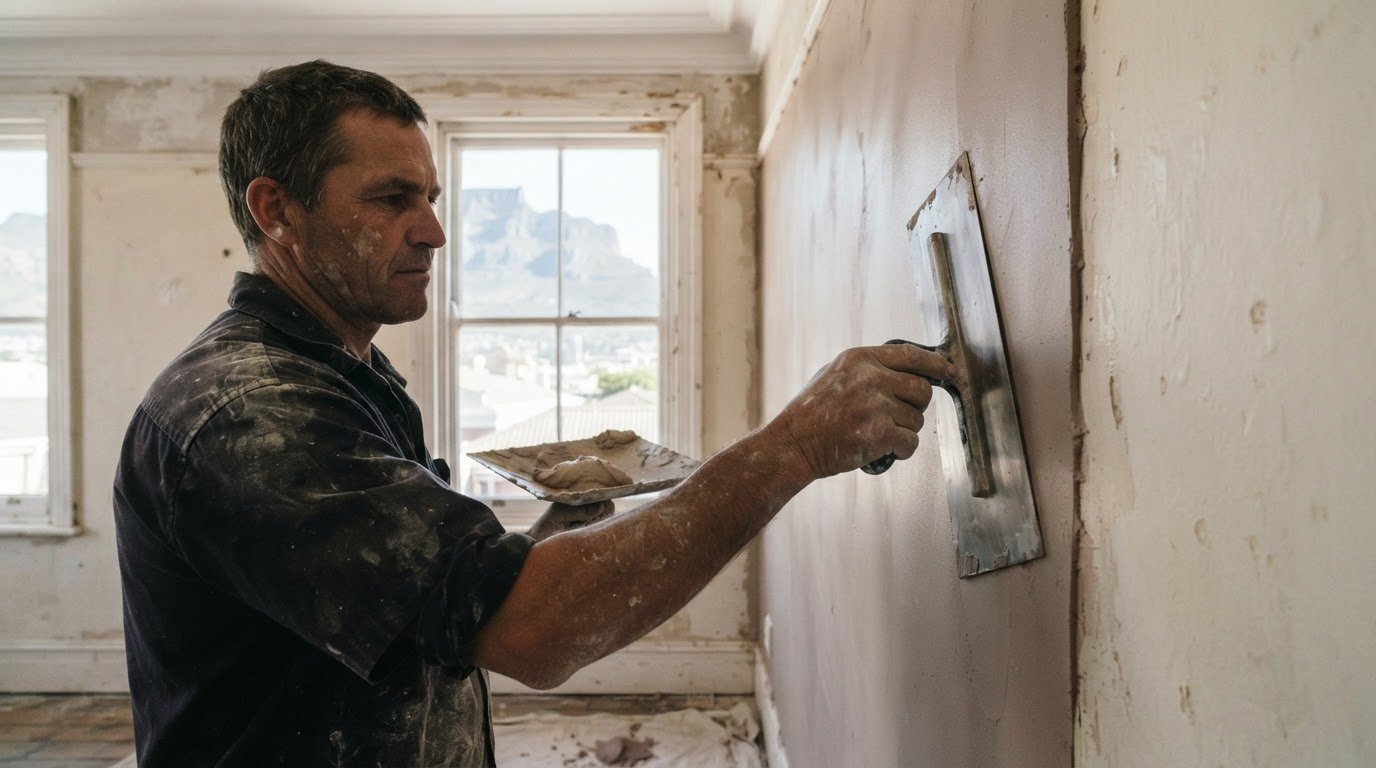
Yes, brickwork repairs can include plastering and wall finishes. House of Maverick provides building and plasterwork, and painting can complete a repaired surface where it suits the project. For example, a boundary wall with damaged plaster may need masonry work first, followed by plaster restoration and paint. The quote should specify which finishes are included.
Do you repair the cause as well as the damage?
The repair plan should address the source of the problem where it can be identified. If a recurring damp patch is linked to water entering from above, replacing only the affected bricks may leave the wall exposed to further damage. House of Maverick provides waterproofing and roof repairs, which may be relevant when moisture is entering through those areas.
What is spalling?
Spalling is the flaking, breaking or crumbling of a hard surface such as brickwork or concrete. On a wall, it may appear as loose fragments, a rough damaged patch or peeling material around a crack. In Cape Town, moisture exposure can contribute to this deterioration. The repair scope depends on the affected material and how much surrounding masonry needs attention.
What types of bricks do you work with?
The assessment considers the existing brickwork and the condition of the surrounding wall. Replacement bricks should suit the existing masonry in size, appearance and function, particularly where the repair will remain visible. Matching the masonry helps the repaired area sit consistently within the wall. The selection depends on the repair location and project requirements.
What brickwork repair services are available in Cape Town?
Brickwork repair can include replacing damaged bricks, restoring mortar joints and repairing masonry sections. House of Maverick provides building and plasterwork in Cape Town, with painting and waterproofing available where they fit the repair scope. A project may need masonry restoration followed by plasterwork, while a moisture-related issue may also require waterproofing.
How much does brickwork repair cost in Cape Town per square metre?
There is no single per-square-metre price that suits every repair. Costs depend on the damage, area involved, access, materials and whether the work includes plastering or protective finishes. Pricing follows a quote request, once the scope and required work have been assessed.
Comments