Damp proofing specialists in Cape Town: prices and costs
The cost of damp proofing in Cape Town depends on the affected area, the severity of the damp and the treatment required. Damp proofing specialists in Cape Town can provide a project-specific price after assessing the work. More extensive damage may require additional preparation and repairs, so one figure cannot describe every property.
It’s reasonable to want a clear budget before deciding how to tackle damp. This guide explains what affects the cost, how the size and severity of the problem shape the work, and what to expect from a chemical damp proof course.
You’ll also learn how this treatment is applied and why identifying the moisture source matters before work begins. We distinguish the treatment from associated preparation and repairs, making it easier to understand why estimates differ and what each covers. The focus is on practical cost factors, not a one-size-fits-all estimate.
Table of Contents
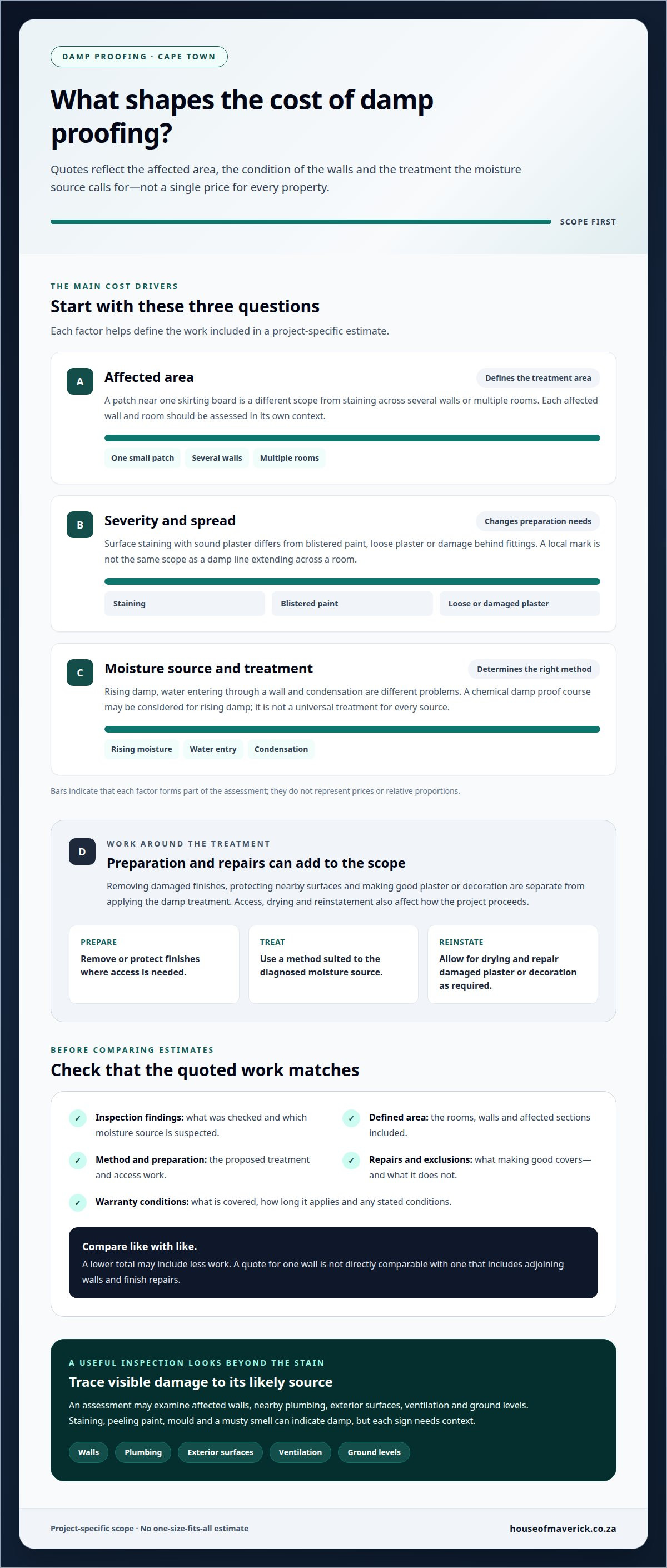
Approximate damp proofing prices in Cape Town
Damp proofing costs vary because every property has a different moisture problem and scope of work. The affected area, severity and treatment required shape the estimate, which is priced for the specific project.
Comparing Quotes, Warranties and Methods
Compare written quotes by their inspection findings, proposed treatment, preparation, repairs and exclusions. A chemical damp proof course and work that addresses water entry solve different problems, so the method should match the diagnosed cause. Review any warranty terms for what they cover, how long they apply and any stated conditions. A lower total may include less work, so compare the same items across estimates.
Inspection and Damp Diagnosis
A sound inspection traces visible damage to likely moisture sources. The specialist can examine affected walls, nearby plumbing, exterior surfaces, ventilation and ground levels, then explain how the findings inform the proposed treatment. Staining, peeling paint, mould and a musty smell can indicate damp, but each sign needs context. A roof or plumbing leak, condensation, and moisture entering through a wall may each require different repairs.
In South Africa, look for relevant damp treatment experience, a written scope and clear business details. Ask for proof of applicable insurance and any registrations relevant to the work, as requirements depend on the activity. The quote should specify the method, preparation, repair work and warranty conditions rather than relying on a general promise.
Specialists may cover Cape Town and surrounding areas, but travel coverage varies by business. The property’s suburb helps establish whether travel and access affect the quoted scope. A damp proofing specialist in Cape Town should explain the proposed work for the particular building, rather than treating every visible stain as the same fault.
Before work begins, clear access to affected walls and move nearby furniture or stored items if needed. Preparation may include removing damaged finishes or protecting adjacent surfaces. The time required depends on the treatment, access and repairs. Drying and reinstatement can extend the project beyond the application itself.
Ongoing moisture can damage plaster, paint, timber and stored belongings. Mould may develop on damp surfaces, while an incorrect repair can hide symptoms without addressing the source. Roof repairs are relevant when an inspection identifies water entering through damaged roof areas, not moisture rising through walls.
Area size and damp severity
The affected surface helps define the scale of damp proofing work. A single patch near a skirting board differs from staining along several walls or across multiple rooms. The measured area is only part of the picture: the depth of damage and access to affected surfaces also shape the work required.
A useful assessment records each affected wall separately instead of treating the whole room as one uniform problem. For example, damp confined to one corner may need a narrower treatment area than damage extending behind furniture and across adjoining walls. Measuring the length and height of affected sections helps clarify the proposed scope.
One small patch: the work may be limited to a local section, subject to the cause and condition of the wall.
Several affected walls: the treatment area grows, and adjoining surfaces may need attention.
Multiple rooms: each space needs its own assessment, since symptoms and wall conditions can differ.
Severity affects the preparation and reinstatement required. Surface staining with sound plaster presents a different scope from blistered paint, loose plaster or damage behind fittings. If finishes must be removed before treatment, that additional work affects the project. The estimate should distinguish treatment from preparation and making good.
Spread matters too. A localised mark and a continuous damp line across a room are not equivalent, even if both affect one wall. The assessment should map visible damage and explain how it relates to the proposed treatment. This makes it easier to see whether the quote covers the affected sections.
For a practical comparison, note the rooms and wall sections included in each estimate. A quote covering one wall cannot be compared directly with one covering adjoining walls and finish repairs. Clear measurements and a defined scope show how the area and severity affect the work, without relying on a generic room-based estimate.
Chemical damp proof courses
A chemical damp proof course is intended to limit moisture rising through masonry. The method typically involves drilling into a mortar joint and introducing a damp-proofing product. The precise application depends on the wall construction and diagnosed moisture source.
For rising damp, an injected course may be considered when moisture is travelling upwards through a wall. It is not a universal solution for penetrating damp or condensation. Penetrating moisture requires attention to the entry point, such as a leak or defective exterior surface. Condensation calls for attention to moisture in the air, ventilation and cold surfaces.
A typical treatment process follows a clear sequence:
Assess the wall: identify the affected masonry and establish whether rising damp is likely.
Prepare the area: remove or protect finishes where access to the mortar joint is needed.
Apply the treatment: drill at planned points and introduce the product into the wall.
Complete reinstatement: allow for drying, then repair damaged plaster or decoration as required.
Wall thickness, construction and existing finishes influence how the work is carried out. The treatment also needs a suitable position within the masonry. A clear written scope should explain the proposed injection area, preparation and follow-on repairs. This distinguishes the damp proof course from the restoration work around it.
In Cape Town, the right combination of inspection, damp diagnosis, treatment and making-good work depends on whether the issue is rising damp, penetrating moisture or condensation. Treating a visible mark alone can leave the underlying cause untouched, so diagnosis should guide the method.
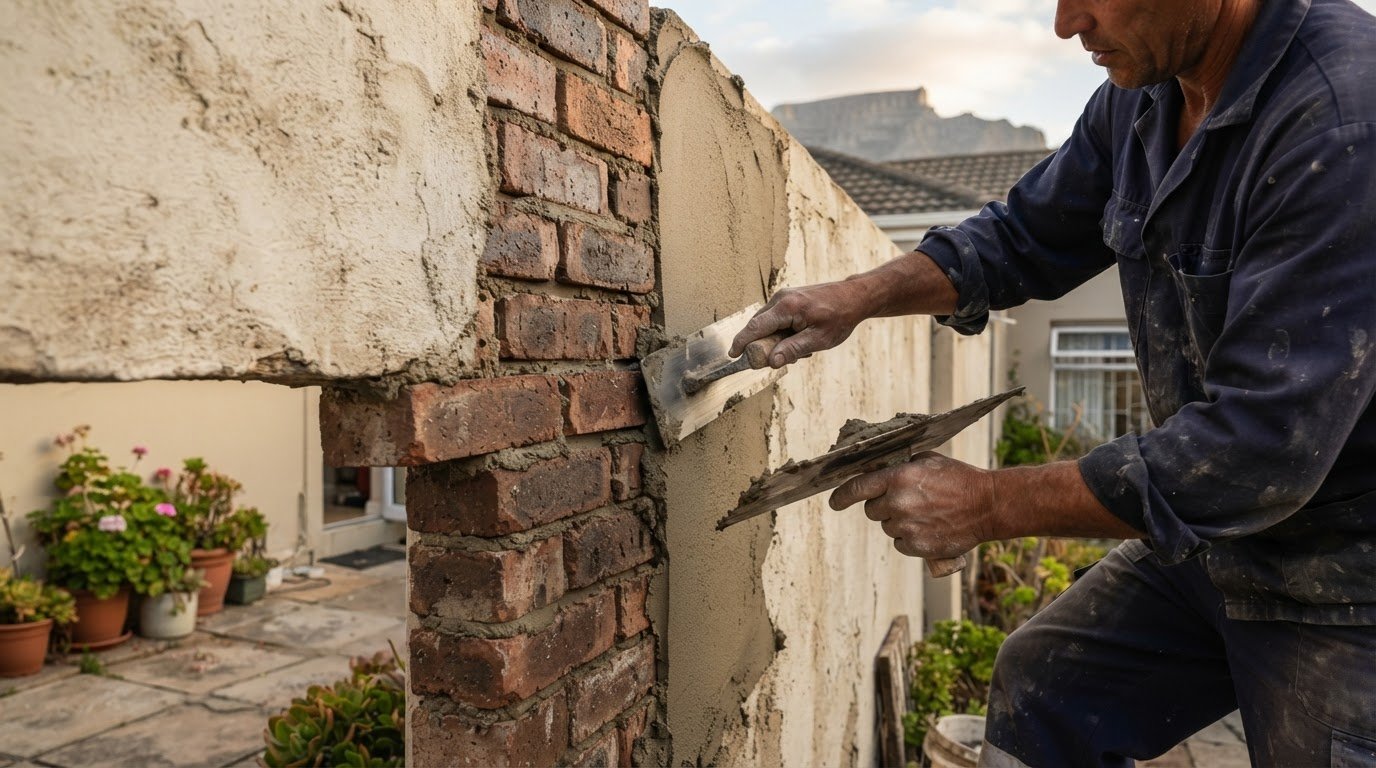
After treatment, damaged finishes may still need attention. Salt deposits or weakened plaster can remain visible even once the moisture source has been addressed. Replastering and repainting are separate finishing stages, and their timing depends on the wall’s condition. Confirm which reinstatement tasks the written scope includes rather than assuming injection covers every surface repair.
Factors affecting damp proofing costs
A quote reflects more than the visible damp patch. The suspected moisture source, wall construction, access and treatment required all shape the work. For a Cape Town home, a clear scope should explain how each factor affects preparation, treatment and reinstatement.
Building materials influence the method and effort involved. Brickwork, stone and cavity walls differ in how affected areas can be accessed and treated. Thick walls or awkward locations may require more involved preparation. A treatment suitable for one wall type may not suit another, so the proposed method should fit the property’s construction.
Access: fitted cupboards, tiled finishes or narrow passages can restrict work on affected walls.
Surface condition: loose plaster and damaged paint may need removal before treatment.
Moisture source: a plumbing leak, roof entry or rising moisture calls for different remedial work.
Reinstatement: plaster repairs and redecorating add tasks beyond the damp treatment itself.
Site access also affects how work is organised. A clear wall may be straightforward to reach, while built-in shelving or heavy fittings can require careful protection or moving. Work across adjoining rooms may involve extra preparation to protect floors, furniture and unaffected finishes. These details belong in the work scope.
The cause matters as much as the visible damage. Treating a wall without addressing water entering through a roof or pipe can leave the source active. Condensation also needs a different response from moisture rising through masonry. A diagnosis linked to the proposed work helps prevent unrelated repairs from being bundled into one unclear estimate.
The cost depends on the case, with the affected area, wall construction, access, treatment and repairs shaping the estimate. A useful quote separates diagnosis, treatment, preparation and finishing so the work can be understood line by line. Compare scopes, not just totals: estimates may cover different surfaces or reinstatement tasks.
House of Maverick
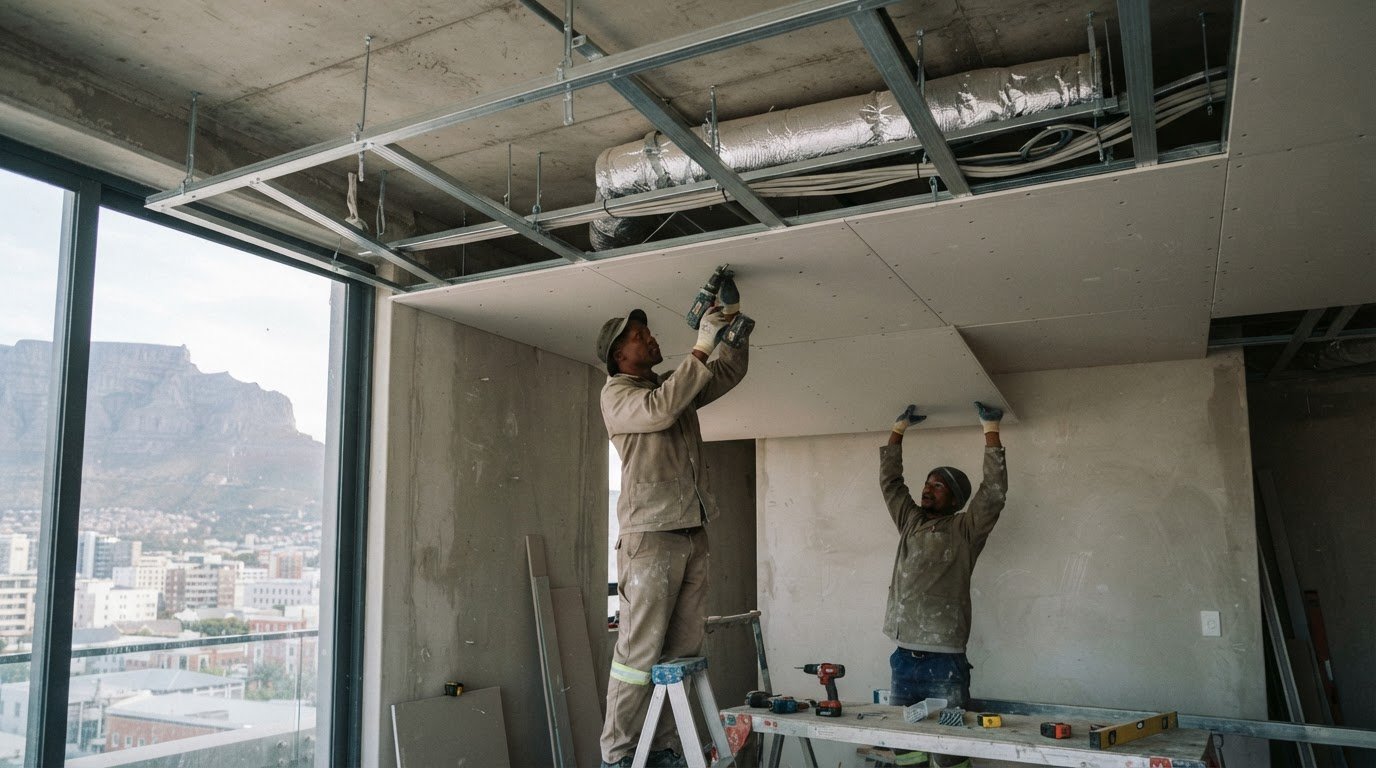
House of Maverick can help with the building and finishing work around a damp-related project. Once the moisture source has been addressed, damaged paint, ceilings or internal walls may need attention to restore the room. House of Maverick provides painting, Dry Wall and Ceilings, and home and office remodelling for these parts of a property project.
This is a practical next step when damp treatment leaves finishes needing repair or when wider remodelling is planned alongside the work. The diagnosis and treatment should guide the finishing work that follows, so repairs address affected surfaces rather than conceal an unresolved moisture problem.
Contact House of Maverick to discuss the building or finishing work your property needs.
Plan the next step with confidence
Before arranging follow-on work, keep the damp diagnosis and repair scope together. This gives you a clearer basis for deciding which surfaces need attention and what finishing work should wait until the moisture issue is addressed. Choosing damp proofing specialists in Cape Town is one part of protecting a property; planning repairs around the findings helps keep the wider project organised.
House of Maverick also provides Painting, Office Remodelling and Air-conditioning. These services may be useful when damp damage is part of a broader maintenance or refurbishment project, but they do not replace the need to address the moisture source.
Share the work you’re planning and discuss a practical next step with House of Maverick. A well-organised repair plan can help you move forward with care.
Frequently Asked Questions
How much does damp proofing cost in Cape Town?
There isn’t one fixed price for damp proofing in Cape Town. The cost depends on the property and work required, so a quote needs to reflect the project scope. For budgeting, keep treatment separate from optional finish upgrades, such as replacing damaged skirting or choosing new paint. This distinction helps you plan necessary repairs alongside improvements you may choose to make.
Are there Cape Town climate, building, or municipal factors that affect damp proofing?
Yes. Exposure to wind-driven rain, a building’s wall materials and the route water takes around the property can all affect the assessment. A damp patch beside a window, for example, may need a different investigation from moisture near an external ground-level wall. Municipal drainage can also be relevant if water appears to enter from outside the property boundary. The likely source and repair scope guide the treatment.

Comments